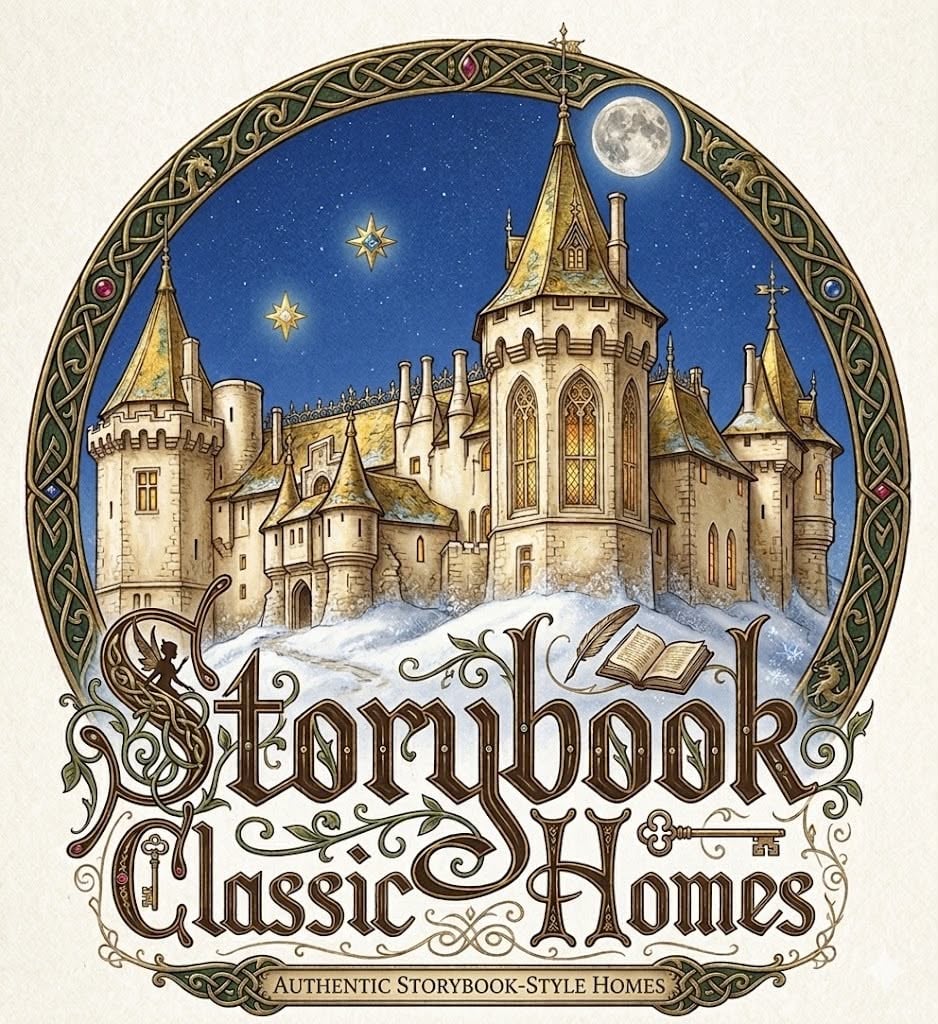
Olde World, Fairytale, Disneyesque, Thomas Kinkade— these are all common descriptions of the storybook style, a romantic evocation of medieval Europe, a delightful and whimsical home style of the twentieth century. The Picturesque school of design movement in 18th-century Europe was a startling departure from the rigid, disciplined right-angle architectural world. Reproduction castles, eccentric remodels of farmhouses, and cottage communities incorporating vernacular elements appeared on the scene. Marie Antoinette constructed mock-medieval French cottages as a hameau for her amusement. After WWI, an untold number of American soldiers came home from Europe with their first taste of foreign culture. They saw rural English and French residential architecture, much of it hundreds of years old and in varying stages of decay. They liked it and brought back fond recollections of this charming style.
So, in the 1920s, Hollywood's motion picture industry made films with exotic locations, and period films added the desire for real imagined Old World architecture. Walt Disney animators drew many exaggerated versions of these homes in their classic fairytale films, such as Snow White and Cinderella. California's housing boom began to explore this amusing architectural style. Storybook homes were the product of the film industry's set designers and tradesmen with a distinct flair for theatre, a love of fine craftsmanship, and a good sense of humour. Hollywoodland's "Beachwood Canyon" was the first development to showcase this style of homes. Most of these homes were built between the 1920s and 1940s. Original homes in this tract were part "kitsch" and part beauty. They ranged from vine-covered cottages to Normandy castles fit for royalty. The original Hollywoodland homes offered suitable settings for Hollywood-period movies. They were laid out by thoughtful, artistic people who wanted to create an environment of beauty and not tract housing as we know it today. Many of these storybook homes were purchased by Hollywood's elite.
Character
Storybook homes featured in Thomas Kinkade paintings have an attractive element of escapism. Naturalistic designs reflective of nature itself. Each level contrasts with the next. These homes have distinctive rooflines, quirky exaggerated facades, unusually sized windows, arched doorways, turrets, klinker brick/stone and half-timbered exteriors. These characteristics looked as if they had been hurriedly cobbled together with salvaged materials by peasants. What you see on the outside is a home that is unique on all four sides - not just a "Hollywood movie-set" front. French - and Norman-style Storybook homes may have rolled eaves (to suggest rounded edges of thatch roofs), synthetic thatch roofing, slate or composite cedar roofing. The utmost attention to detail is evident. From the curb, one can’t help but wonder what their story is about.
In a Storybook Classic Home, you can imagine you've stepped back 300 years. A cobblestone pathway leads you to the front door with mammoth-sized medieval strap hinges. Walls and wood doors may look a little antiquated, but your home is brand new. Stone and wood floors lead you down into your hearth room. A crackling, warm stone fireplace stands from floor to ceiling. Wrought-metal lighting fixtures illuminate wood beams on the vaulted ceilings. Cozy niches are waiting to be explored. Large picture windows frame the beauty of your neighbourhood. Each room is designed to add depth to the home. This home’s design is a timeless masterpiece.